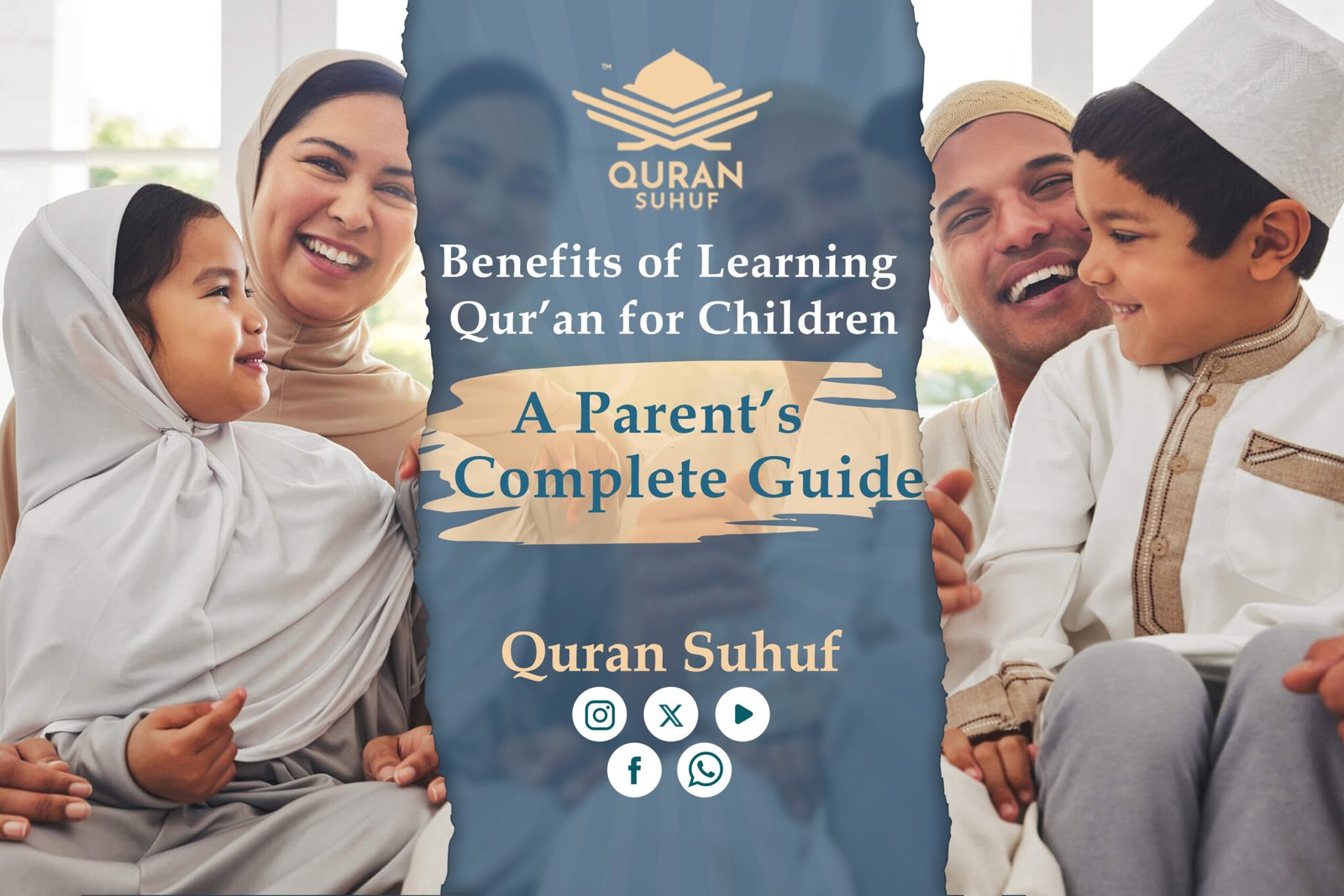
Benefits of Learning Qur’an for Children: A Parent’s Complete Guide
As parents, one of the most significant gifts you can offer your children is a strong spiritual and moral foundation. Learning the Holy Qur’an from an early age provides exactly that, transforming not only your child’s character but also enhancing their cognitive abilities, emotional resilience, and academic performance. This comprehensive guide explores the profound benefits of Quranic education for children and provides actionable strategies for parents to support their child’s Quranic journey.
At-a-Glance: Top Benefits of Qur’an Learning for Children
| # | Benefit | Core Value |
|---|---|---|
| 1 | Spiritual connection and relationship with Allah | Deep faith and divine guidance |
| 2 | Strong moral and ethical foundation | Character and values development |
| 3 | Enhanced memory and cognitive development | Brain development and recall abilities |
| 4 | Improved language and literacy skills | Language mastery and fluency |
| 5 | Increased self-discipline and focus | Concentration and perseverance |
| 6 | Emotional resilience and inner peace | Mental health and stress relief |
| 7 | Protection from negative influences | Moral compass and resistance to peer pressure |
| 8 | Development of confidence and self-worth | Positive self-image and achievement |
| 9 | Strengthened family bonds through shared learning | Family connection and unity |
| 10 | Deep understanding of Islamic identity and values | Cultural pride and belonging |
| 11 | Improved academic performance and concentration | Academic excellence and focus |
| 12 | Cultivation of patience, perseverance, and personal growth | Character development and resilience |
| 13 | Connection to cultural and religious heritage | Heritage and global community |
Why Childhood Is the Perfect Time to Learn Qur’an
Childhood is a critical developmental window where core values, beliefs, and neural pathways are forming. Research on child development shows that children have remarkable memory capacity and cognitive plasticity—the brain’s ability to adapt and form new connections—making ages 3-12 the ideal period for Quranic learning.
The Brain’s Language Acquisition Window
Children’s brains are naturally primed for language learning. Between ages 3-7, children absorb languages at an extraordinary rate, making this the perfect time to introduce Arabic and Quranic recitation. The systematic memorization and repetition required in Quranic study directly stimulates brain development, creating strong neural pathways for memory retention, pattern recognition, and linguistic abilities that last a lifetime.
Building Lifelong Spiritual Habits
When children develop a love for the Qur’an early, it becomes part of their identity and a resource they naturally return to during challenging times. This early foundation transforms Quranic learning from a task into a lifelong blessing, making children more likely to continue their Islamic education into adulthood.
The 13 Major Benefits of Qur’an Learning for Children
Benefit 1: Deep Spiritual Connection and Relationship with Allah
What it means: Learning the Qur’an nurtures a profound spiritual bond between your child and Allah, creating a sense of purpose and divine guidance.
Why it matters: Children who study the Qur’an develop a conscious awareness of Allah’s presence and guidance in their daily lives. This spiritual connection provides emotional security, comfort during difficulties, and a clear moral compass rooted in faith.
In practice: When children understand that the Qur’an is Allah’s direct word to them, they approach it with reverence and love. Over time, this transforms into a personal relationship where they naturally turn to the Qur’an for guidance, comfort, and spiritual nourishment.
Parent action: Discuss the Qur’an’s spiritual significance with your child. Explain that learning is building a direct connection with Allah, not just academic study.
Benefit 2: Strong Moral and Ethical Foundation
What it means: The Qur’an explicitly teaches timeless values that shape children into ethical, compassionate individuals.
Core values children learn:
-
Honesty and truthfulness.
-
Kindness and compassion.
-
Justice and fairness.
-
Mercy and forgiveness.
-
Humility and modesty.
-
Respect for parents and elders.
-
Gratitude and appreciation.
-
Patience and perseverance.
Why it matters: In today’s world filled with competing values and negative influences, the Qur’an provides a clear ethical framework. Children who internalize Quranic values develop stronger character, make better decisions, and treat others with greater kindness and respect.
Research insight: Studies show that children exposed to religious and moral education consistently score higher on measures of empathy, prosocial behavior, and ethical decision-making.
Real-world example: A child learning the Quranic verse about honesty naturally applies it when tempted to lie to their parents. They understand that truthfulness pleases Allah and builds trust.
Parent action: Point out examples in daily life where Quranic values apply—kindness to siblings, honesty with teachers, respect for elders.
Benefit 3: Dramatically Enhanced Memory and Cognitive Development
What it means: The mental exercise of Quranic study stimulates brain development in ways few other activities can.
Brain Activation Through Quranic Learning:
| Mental Process | How It Works | Long-Term Benefit |
|---|---|---|
| Auditory Processing | Listening to and distinguishing Arabic sounds | Enhanced sound discrimination and language skills |
| Pattern Recognition | Understanding Arabic grammar and structure | Improved analytical thinking |
| Linguistic Analysis | Recognizing word patterns and meanings | Stronger language processing |
| Repetition & Recall | Memorizing verses through repetition | Dramatically strengthened memory |
| Concentration | Focused attention on complex material | Improved sustained focus abilities |
| Phonetic Accuracy | Precise pronunciation of difficult sounds | Better articulation and pronunciation |
Memory enhancement proof: Children who memorize Quranic verses develop significantly sharper recall abilities transferable to academic subjects. The practice literally rewires the brain for better memory retention.
Academic benefits: Parents report their children:
-
Perform better in all subjects requiring memorization
-
Show improved reading comprehension
-
Develop stronger language skills across languages
-
Achieve higher overall academic performance
Parent action: Support memory development by practicing Quranic verses together regularly. Celebrate progress to reinforce the neural pathways being built.
Benefit 4: Improved Language and Literacy Skills
What it means: Since the Qur’an is entirely in Arabic, learning it naturally develops Arabic language proficiency while often improving literacy in the child’s native language.
Language Development Pathway:
| Stage | Focus | Skill Developed |
|---|---|---|
| Stage 1 | Letter recognition and pronunciation | Arabic alphabet mastery |
| Stage 2 | Word reading and vocabulary expansion | ~1,700 Quranic words learned |
| Stage 3 | Verse understanding and grammar | Classical Arabic grammar |
| Stage 4 | Reading fluency and comprehension | Advanced reading abilities |
| Stage 5 | Meaning interpretation and analysis | Deep language understanding |
Language development details:
-
Vocabulary expansion: The Qur’an contains approximately 1,700 unique Arabic words. Exposure to this rich vocabulary naturally expands children’s linguistic abilities.
-
Grammar mastery: Quranic Arabic follows classical grammar rules, providing structured language instruction
-
Pronunciation perfection: Children learn precise Arabic pronunciation, particularly valuable for Tajweed (recitation rules)
-
Reading fluency: Moving from letter recognition to word reading to verse understanding builds progressive reading skills
-
Cross-language benefit: Learning Arabic phonetically and grammatically often improves reading skills in English and other languages.
Real example: A child learning Quranic Arabic develops stronger phonetic awareness, which research shows improves reading abilities in English and other languages.
Bilingual advantage: For non-Arabic speaking families, Quranic learning provides structured language education while maintaining cultural connection.
Parent action: Don’t worry if you’re not fluent in Arabic. Quality online Qur’an teachers provide proper instruction. Your support and encouragement matter more than your own language ability.
Benefit 5: Development of Self-Discipline and Focus
What it means: Quranic memorization (Hifz) and consistent study cultivate discipline and sustained concentration—skills essential for academic and professional success.
How Discipline Develops Through Quranic Study:
| Discipline Element | How It’s Built | Real-World Application |
|---|---|---|
| Regular Schedule | Daily practice commitment | Consistent homework and study habits |
| Overcoming Challenges | Mastering difficult verses | Persistence with difficult subjects |
| Delayed Gratification | Gradual progress toward goals | Better impulse control |
| Self-Control | Managing distractions during study | Improved classroom focus |
| Goal Achievement | Setting and reaching milestones | Motivation for academic goals |
Academic spillover: Children who develop Quranic discipline consistently show:
-
Improved focus in classroom settings.
-
Better homework completion rates.
-
Stronger time management skills.
-
Greater academic achievement overall.
Parent observation: “My child’s focus improved dramatically once he started Qur’an memorization. He applies that same concentration to his schoolwork.”
Parent action: Create a consistent Qur’an learning schedule. Show your child that you prioritize this commitment, modeling discipline yourself.
Benefit 6: Emotional Resilience and Inner Peace
What it means: Quranic recitation and reflection provide emotional comfort, stress relief, and psychological resilience.
How Emotional Health Improves:
| Emotional Benefit | Mechanism | Outcome |
|---|---|---|
| Spiritual Solace | Verses about Allah’s mercy and compassion | Comfort during difficulties |
| Emotional Regulation | Rhythmic, melodic Quranic recitation | Calming neurological effect |
| Perspective & Hope | Understanding challenges as tests with wisdom | Reduced anxiety and despair |
| Anxiety Reduction | Regular Quranic engagement | Lower stress and worry levels |
| Psychological Resilience | Faith foundation and divine protection | Better coping mechanisms |
How it works: The Qur’an offers:
-
Spiritual solace: Verses about Allah’s mercy, compassion, and support provide comfort during difficult times.
-
Emotional regulation: The rhythmic, melodic nature of Quranic recitation has a calming neurological effect.
-
Perspective and hope: Quranic teachings help children understand challenges as temporary tests with wisdom behind them.
-
Anxiety reduction: Regular Quranic engagement has been shown to reduce anxiety and depression in children.
Research insight: Islamic scholars and modern psychologists both recognize the therapeutic effects of Quranic recitation. The combination of spiritual meaning and rhythmic vocalization creates measurable calming effects.
Real scenario: A child stressed about school exams finds comfort in reciting familiar Quranic verses, which calms their anxiety and helps them focus.
Parent action: During stressful times for your child, suggest listening to beautiful Quranic recitations together. Explain that Allah’s words bring peace and protection.
Benefit 7: Natural Protection from Negative Influences
What it means: Strong Quranic foundation and Islamic values act as a protective shield against harmful peer pressure, inappropriate content, and destructive behaviors.
Protection Through Values:
| Negative Influence | Quranic Protection | Result |
|---|---|---|
| Peer pressure (bad behaviors) | Clear Quranic guidance on right/wrong | Resistance to destructive peer pressure |
| **Substance abuse | Religious prohibition and understanding wisdom | Strong avoidance and informed choices |
| Inappropriate relationships | Clear Quranic boundaries and wisdom | Better decision-making |
| Academic dishonesty | Emphasis on honesty and integrity | Natural resistance to cheating |
| Disrespect and violence | Teaching mercy, respect, and kindness | Reduced aggression and disrespect |
How protection works: When children have internalized Quranic values, they:
-
Understand which behaviors are forbidden and why
-
Have strong internal guidance aligned with their faith
-
They are more likely to refuse peer pressure contrary to their values
-
Develop critical thinking about worldly influences
-
Find belonging in faith-based communities with positive influences
Critical during adolescence: During teenage years, when peer pressure peaks, children witha strong Quranic foundation are significantly less likely to engage in:
-
Substance abuse.
-
Inappropriate relationships.
-
Academic dishonesty.
-
Disrespectful behavior.
-
Other destructive choices.
Parent benefit: The Qur’an provides a framework you can reference when discussing difficult topics with your teen. “The Qur’an teaches us…” becomes a neutral authority rather than just parental opinion.
Parent action: Help your child understand that Quranic values protect them, not restrict them. Frame Islamic teachings as beneficial guidance, not punishment.
Benefit 8: Development of Confidence and Self-Worth
What it means: Progressive achievement in Quranic study builds genuine confidence and positive self-image.
Confidence Building Pathway:
| Achievement Stage | Confidence Builder | Long-Term Impact |
|---|---|---|
| First verse memorized | Recognition and celebration | Belief in the ability to achieve |
| First surah completed | Family pride and encouragement | Growing self-belief |
| Improved recitation | Tangible progress visible | Confidence in self-improvement |
| Milestone achievements | Public recognition and celebration | Strong positive self-image |
| Ongoing progress | Consistent achievement pattern | Deep-rooted confidence |
Confidence pathway:
-
Achievement recognition: Parents celebrate each memorized verse or improved recitation.
-
Tangible progress: Unlike abstract subjects, Quranic progress is measurable and visible.
-
Overcoming difficulty: Mastering challenging verses builds belief in the ability to overcome obstacles.
-
Sense of belonging: Participating in Quranic circles or classes creates community and identity.
-
Parental pride: Children deeply feel and internalize parental pride in their accomplishments.
Long-term impact: Children who develop confidence through Quranic achievement typically:
-
Have higher self-esteem overall.
-
They are more resilient in facing other challenges.
-
Make better choices based on self-respect.
-
Develop into more confident adults.
Parent observation: “My daughter went from shy and uncertain to confident and assured after memorizing her first surah. That achievement changed how she sees herself.”
Parent action: Celebrate Quranic achievements visibly. Share your child’s progress with family and friends. Let them see that their accomplishment matters.
Benefit 9: Strengthened Family Bonds Through Shared Learning
What it means: Learning the Qur’an together as a family creates unique bonding opportunities and shared spiritual experiences.
Family Connection Methods:
| Bonding Method | How It Works | Relationship Impact |
|---|---|---|
| Shared learning sessions | Regular family Qur’an time together | Cherished family ritual |
| Intergenerational connection | Grandparents, parents, and children learning | Cross-generational bonds |
| Meaningful conversations | Discussing Quranic values and meanings | Deeper parent-child communication |
| Common identity | Shared Islamic commitment and values | Stronger family unity |
| Mutual respect | Children see parents’ dedication | Deepened family respect |
Bonding mechanisms:
-
Shared learning sessions: Regular family Qur’an time becomes a cherished ritual.
-
Intergenerational connection: Grandparents, parents, and children learning together strengthens family ties across generations.
-
Meaningful conversations: Discussing Quranic meanings opens conversations about values and life philosophy.
-
Common identity: Shared commitment to Islamic learning reinforces family identity and values.
-
Mutual respect: Children see parents taking Islamic education seriously, modeling respect for the Qur’an.
Family benefits reported: Families who study the Qur’an together report:
-
Stronger parent-child relationships.
-
More meaningful family time.
-
Better communication about values.
-
Shared purpose and direction.
-
Resilience during family challenges.
Real example: A family that memorizes verses together and discusses their meanings develops a special language and connection around Islamic values.
Parent action: Make family Qur’an time special. Create a comfortable, distraction-free environment. Make it positive, not pressured.
Benefit 10: Deep Understanding of Islamic Identity and Values
What it means: Through Quranic study, children develop clarity about their religious identity and understand what it truly means to be Muslim.
Islamic Identity Development:
| Identity Element | How Qur’an Builds It | Child Outcome |
|---|---|---|
| Core beliefs | Learning fundamental Islamic principles | Clear understanding of faith |
| Practice wisdom | Understanding why Muslims observe practices | Meaningful religious participation |
| Cultural pride | Connection to Islamic civilization | Pride in heritage and religion |
| Value clarity | Understanding Islamic ethics and guidance | Strong personal values system |
| Global belonging | Awareness of the worldwide Muslim community | Sense of belonging to Ummah |
Identity development: Learning the Qur’an helps children:
-
Understand Islam’s core principles and beliefs.
-
Recognize the wisdom behind Islamic practices.
-
Develop pride in their religious identity.
-
Answer their own questions about faith.
-
Navigate the world with clear values and purpose.
Cultural preservation: For Muslim families living in non-Muslim-majority countries, Quranic education preserves a connection to:
-
Religious heritage and traditions.
-
Arabic language and culture.
-
Global Muslim community (Ummah).
-
Values distinct from the surrounding secular culture.
Confidence in identity: Children who deeply understand the Qur’an are more confident in their religious identity and less susceptible to confusion or negative stereotypes.
Parent benefit: When children understand why Muslims do what they do (based on Quranic teaching), they’re more likely to continue practicing these values into adulthood.
Parent action: Explain Islamic practices through their Quranic basis. “We fast Ramadan because the Qur’an teaches us…” This connects practice to meaning.
Benefit 11: Improved Academic Performance and Concentration
What it means: The cognitive skills developed through Quranic study directly transfer to improved academic performance across all subjects.
Academic Improvement Mechanisms:
| Cognitive Skill Developed | How Qur’an Builds It | Academic Application |
|---|---|---|
| Enhanced concentration | Focused memorization practice | Better classroom attention |
| Strong memory | Systematic verse memorization | Improved retention in all subjects |
| Discipline & consistency | Regular daily practice requirements | Better homework completion |
| Pattern recognition | Analyzing Arabic grammar and structure | Improved math and analytical skills |
| Reading comprehension | Deep Quranic text analysis | Stronger reading across subjects |
How it works:
-
Enhanced concentration: Quranic memorization builds focus capacity, improving classroom attention.
-
Memory improvement: Techniques learned for Quranic memorization apply to all academic subjects.
-
Discipline and consistency: Regular Qur’an study creates habits supporting academic success.
-
Pattern recognition: Quranic study develops the analytical thinking needed for mathematics, languages, and sciences.
-
Reading comprehension: Quranic text analysis improves general reading skills.
Academic improvements documented: Parents and teachers report:
-
Better grades in all subjects.
-
Improved test performance.
-
Stronger writing and communication skills.
-
Greater classroom participation.
-
Higher overall academic engagement.
Research context: Studies show children with religious/spiritual education often outperform peers on standardized tests and academic measures.
Parent action: Recognize that time invested in Quranic learning is an investment in overall academic success, not a distraction from schoolwork.
Benefit 12: Cultivation of Patience, Perseverance, and Personal Growth
What it means: The Quranic journey teaches essential life skills through concrete, achievable challenges.
Character Development Through Quranic Learning:
| Life Lesson | How Qur’an Teaches It | Child Benefits |
|---|---|---|
| Patience | Memorization takes time and gradual progress | Acceptance of gradual improvement |
| Perseverance | Difficult verses require multiple attempts | Learning not to give up easily |
| Resilience | Mistakes happen during learning | Understanding failures as learning opportunities |
| Humility | Recognizing the depth of Quranic knowledge | Intellectual humility and openness |
| Growth mindset | Each challenge is an improvement opportunity | Seeing difficulties as positive |
| Gratitude | Recognizing progress and support | Appreciation for abilities and help |
Lessons learned:
-
Patience: Memorization takes time; children learn to accept gradual progress.
-
Perseverance: Difficult verses require multiple attempts; children learn not to give up.
-
Resilience: Mistakes happen; children learn to correct and continue.
-
Humility: Quranic study reveals the depth of knowledge needed; children develop intellectual humility.
-
Growth mindset: Each challenge is an opportunity to improve, not a failure.
-
Gratitude: Recognizing progress builds gratitude for abilities and support.
Life application: Children internalize that:
-
Meaningful achievements require consistent effort.
-
Failures are learning opportunities, not defeats.
-
Improvement takes time and patience.
-
Personal growth is continuous and rewarding.
Parent observation: “My son used to give up easily. Now, through Qur’an memorization, he’s learned that persistence pays off. He applies that to everything.”
Parent action: When your child faces difficulty in memorization, guide them through it rather than allowing them to quit. Teach persistence through experience.
Benefit 13: Connection to Cultural and Religious Heritage
What it means: Quranic learning connects children to the rich heritage of Islamic civilization and Muslim communities worldwide.
Heritage Connection:
| Heritage Aspect | Connection Through Qur’an | Child Development |
|---|---|---|
| Historical connection | 1,400+ years of Islamic civilization | Pride in heritage and history |
| Global community | Connection to Ummah (worldwide Muslims) | Sense of belonging to the global community |
| Islamic scholars | Stories of historical Islamic figures | Role models and inspiration |
| Arabic language | Classical Arabic and Islamic culture | Connection to ancestral language |
| Family traditions | Parents’ and ancestors’ practices | Understanding family heritage |
Heritage connection: Through the Qur’an, children connect to:
-
Islamic history spans 1,400+ years of knowledge, art, science, and culture.
-
Global Muslim community (Ummah) across all nations and cultures.
-
Scholars, saints, and exemplars throughout Islamic history.
-
Arabic language and Islamic civilization achievements.
-
Family traditions and ancestral practices.
Cultural pride: Children develop:
-
Pride in Islamic heritage and achievements.
-
Respect for their parents’ and ancestors’ traditions.
-
Connection to Muslim brothers and sisters worldwide.
-
Understanding of Islam’s contributions to world civilization.
-
A sense of belonging to something greater than themselves.
Identity integration: For children in multicultural societies, this heritage connection provides:
-
Clear cultural identity.
-
Sense of belonging and community.
-
Pride in their religious/cultural background.
-
Framework for navigating multiple cultural influences.
Parent action: Share stories of Islamic scholars, scientists, and historical figures who were shaped by the Qur’an. Help your child see their heritage positively.
The Best Age to Begin Qur’an Learning
Expert consensus: Children can begin Quranic exposure as early as 3-4 years old with age-appropriate, informal methods, though formal structured lessons typically begin around 6-7 years old when attention spans are longer.
Age-Appropriate Learning Paths
| Age Group | Learning Focus | Daily Duration | Learning Method | Goals |
|---|---|---|---|---|
| Ages 3-5 | Early exposure and foundational love | 5-10 minutes | Informal, play-based storytelling | Develop a love for the Qur’an sounds |
| Ages 6-9 | Formal learning and alphabet mastery | 15-20 minutes | Structured lessons with a teacher | Learn to read and understand the Qur’an |
| Ages 10+ | Advanced memorization and interpretation | 30-45 minutes | Advanced curriculum with Tajweed | Hifz and deeper Quranic knowledge |
Detailed breakdown:
Ages 3-5 (Early exposure):
-
Listen to beautiful Quranic recitations.
-
Learn short, simple surahs through repetition.
-
Recognize Arabic letters through games.
-
Develop love for the Qur’an’s sounds and melodies.
-
Practice 5-10 minute sessions daily.
Ages 6-9 (Formal learning begins):
-
Learn the complete Arabic alphabet and writing.
-
Begin systematic Tajweed (proper recitation rules).
-
Memorize short surahs and frequently-used verses.
-
Understand basic Quranic meanings.
-
Practice 15-20 minute daily sessions.
Ages 10+ (Advanced learning):
-
Begin Hifz (memorization of the entire Qur’an) if interested.
-
Study Tafsir (interpretation and meaning).
-
Engage with complex Quranic concepts.
-
Deepen understanding of Islamic teachings.
-
Practice 30-45 minute daily sessions.
How to Support Your Child’s Quranic Journey: Practical Parent Strategies
Strategy 1: Create a Supportive Learning Environment
A positive Quranic environment includes:
-
Designated Qur’an space: A clean, comfortable corner with minimal distractions where your child studies
-
Attractive materials: Colorful, appealing Qur’an editions and Islamic books
-
Your own engagement: Demonstrate your love and respect for the Qur’an through your behavior
-
Audio inspiration: Play beautiful Quranic recitations in your home
-
Family participation: Join your child in learning; don’t position yourself as distant.
Environmental impact: Children who learn in supportive, positive environments develop genuine love for the Qur’an, not resentment. They’re more likely to continue studying independently as they grow.
Strategy 2: Maintain Consistency and Regular Practice
Consistency matters more than intensity: Regular 20-minute daily sessions beat sporadic 2-hour marathons.
Best practices:
| Consistency Element | Implementation | Why It Matters |
|---|---|---|
| Same time daily | 7:00 AM before school or 4:00 PM after school | Creates predictability and habit |
| Realistic expectations | 15-20 min younger children, 30-45 min older | Sustainable long-term commitment |
| Non-negotiable commitment | Treat it like school—don’t skip | Shows the importance of the child |
| Visible progress tracking | Mark verses on the chart; celebrate milestones | Motivates continued effort |
| Flexible adjustment | Allow occasional breaks; quickly resume | Realistic and sustainable |
Consistency result: Children who experience consistent Quranic study develop it as a lifelong habit. Those with sporadic, pressured learning often abandon it once independent.
Strategy 3: Use Engaging, Age-Appropriate Teaching Methods
Avoid: Boring, rote memorization without meaning; harsh correction; forced learning; comparing children’s progress.
Instead, use:
-
Storytelling: Explain Quranic narratives in engaging ways
-
Games and activities: Memory games with verses, Qur’an-themed puzzles, and competitive memorization.
-
Multimedia resources: Educational apps, YouTube channels, interactive websites.
-
Visual aids: Colorful illustrations, charts, animated Quranic explanations.
-
Technology integration: Apps like AlifBee, Quran Academy, or similar that gamify learning.
-
Praise effort: Celebrate improvement and effort, not just perfection.
-
Make it fun: Laugh together, enjoy family Qur’an time, sing melodiously.
Engagement outcome: Children who learn through engaging methods love the process and continue independently. Those forced through dull methods often stop when parental pressure ends.
Strategy 4: Connect Quranic Teachings to Daily Life
Application strengthens understanding:
-
Before decisions: “What does the Qur’an teach us about honesty/kindness in this situation?”
-
Explain practices: “We make Dua (supplication) because the Qur’an teaches us that Allah loves when we ask Him.”
-
Model Quranic values: Let your child see you applying Quranic teachings in your own life
-
Discuss meanings: Ask your child, “What do you think this verse means? How can we practice it?”
-
Real-world examples: Point out people exhibiting Quranic values; discuss how Quranic principles solve real problems
Impact: When children see the Qur’an’s practical relevance, they understand it’s not just a religious obligation but guidance for living well.
Strategy 5: Combine with Online Professional Instruction
While parental support is crucial, professional Qur’an teachers accelerate progress:
Benefits of professional tutoring:
-
Proper Tajweed instruction (recitation rules).
-
Correction of pronunciation mistakes before they become habits.
-
Structured curriculum with clear progression.
-
Professional motivation and accountability.
-
The expertise your child benefits from, even if you’re knowledgeable.
Recommendation: Even one 30-minute lesson weekly with a qualified teacher dramatically improves progress and pronunciation accuracy. Quran Suhuf Academy offers personalized 1-on-1 online Qur’an lessons for children of all levels, with experienced instructors trained in child-focused teaching methods.
Combined approach: Parental daily practice + professional weekly instruction = optimal learning.
Strategy 6: Focus on Consistency Over Perfection
Common parental mistake: Pressuring children for perfect memorization or pronunciation, creating stress and resentment.
Better approach:
-
Celebrate effort and progress, not just perfection
-
Normalize mistakes as part of learning
-
Show patience when your child forgets or struggles
-
Praise perseverance in facing difficult verses
-
Focus on gradual improvement over flawless performance
Long-term impact: Children who learn in pressure-free, encouraging environments develop genuine love for the Qur’an and self-motivation to improve.
Strategy 7: Share Progress and Celebrate Achievements
Visible celebration reinforces motivation:
| Celebration Method | Implementation | Psychological Effect |
|---|---|---|
| Tell family & friends | Share memorization progress regularly | External validation and pride |
| Create milestones | Celebrate 1st surah, 5 surahs, 10 surahs | Clear goals and achievements |
| Public achievement | Arrange recitation opportunities for the family | Recognition of accomplishment |
| Certificates/awards | Create visual reminders of achievements | Tangible proof of progress |
| Special privileges | Earned rewards for significant progress | Motivation for continued learning |
Psychological benefit: When children feel their achievements are valued, their internal motivation strengthens. They begin learning for themselves, not just for parental approval.
Common Challenges and Solutions
| Challenge | Root Cause | Solution |
|---|---|---|
| Child loses focus or motivation | Sessions too long; methods too boring; external stress | Shorten sessions; switch to games/apps; take a short break; reduce external pressure |
| Difficulty with pronunciation | Lacks proper audio models; needs expert feedback | Use apps with audio playback; hire a Tajweed tutor; practice with correct models |
| The child forgets previously memorized material | Normal learning cycle; insufficient review | Use spaced repetition; review recently memorized more often; create review games |
| Parental guilt (not fluent in Arabic) | Self-imposed pressure | Hire qualified tutors; focus on creating a supportive environment; your encouragement matters most |
Real Parent Stories: Transformative Quranic Learning
“My son was struggling in school and struggling with self-confidence. After 6 months of regular Qur’an memorization, his grades improved, but more importantly, he became confident. He’s learned that he can achieve difficult things through persistence. That transformation extended to his whole life.” – Amina, mother of a 9-year-old.
“We didn’t know if our daughter would connect with the Qur’an growing up in a secular country. Her teacher started teaching her online, and now she’s become the one reminding us to pray on time. The Qur’an has become her moral compass and source of pride in her Islamic identity.” – Hassan, father of 11-year-old.
“Memorizing Qur’an taught my daughter discipline. She was scattered and struggled with focus. Now, seeing the direct results of daily practice—verses memorized, progress visible—she’s applied that discipline to her schoolwork. Her grades are better, and more importantly, her confidence is transformed.” – Layla, mother of a 10-year-old.
Frequently Asked Questions (FAQ)
Q1: At what age should my child start learning Qur’an?
A: Children can begin exposure as early as 3-4 years old through listening and informal practice. Formal structured lessons typically begin around 6-7 years old. There’s no age that’s “too late”—you can start at any age.
Q2: How much time should I dedicate to Qur’an learning daily?
A: Younger children (ages 5-8): 15-20 minutes daily
Older children (ages 9+): 20-45 minutes daily
Consistency matters more than duration. Daily 15 sessions beat sporadic 2-hour sessions.
Q3: Will learning Qur’an interfere with my child’s secular education?
A: No. Research shows that Quranic learning actually enhances academic performance through improved memory, concentration, and discipline. Many high-achieving students combine excellent secular academics with strong Quranic learning.
Q4: Can my child learn Qur’an online? Is it as effective as in-person?
A: Yes, absolutely! Online Quranic instruction is highly effective, especially with qualified teachers and consistent home practice. Many children prefer online learning for its flexibility and comfort. Professional online instruction + consistent parental support = excellent results.
Q5: What if I’m not Muslim or not fluent in Arabic?
A: Supporting your child’s Quranic learning is possible regardless. Hire qualified tutors for instruction, create a supportive home environment, and show interest in their learning. Your encouragement matters most.
Q6: Is it better to focus on understanding meaning or memorization first?
A: Both together are ideal. Children should understand what they’re memorizing, not just repeat sounds. Professional teachers balance both—explaining meanings while teaching proper recitation.
Q7: How can I keep my child motivated if they lose interest?
A: Change your methods (more games, apps, stories), ensure sessions aren’t too pressured, celebrate progress visibly, take breaks when needed, and remember that consistency over months shows benefits even if interest dips short-term.
Q8: What if my child wants to memorize the entire Qur’an (Hifz)?
A: Hifz is a beautiful goal that typically takes 2-5 years depending on age and starting point. Start with shorter surahs, build a strong foundation, then progress. Professional tutors can guide a Hifz journey.
Why Choose Quran Suhuf Academy for Your Child’s Quranic Journey
Quran Suhuf Academy specializes in personalized, child-focused Qur’an instruction designed specifically for beginners and children from non-Arabic speaking backgrounds. We understand the unique needs of your family.
Our approach includes:
✓ Experienced, certified Qur’an teachers trained in child education.
✓ Flexible scheduling accommodating your family’s time zone and commitments.
✓ 1-on-1 personalized instruction adapted to your child’s pace, learning style, and goals.
✓ Proper Tajweed teaching from day one to build correct pronunciation habits.
✓ Age-appropriate curriculum for children ages 5+.
✓ Progress tracking with regular updates on your child’s advancement.
✓ Safe, comfortable online environment with parental oversight options.
✓ Choice of male or female instructors suiting your family’s preferences.
✓ Trial classes are available so your child can experience our teaching before committing.
Whether your goal is learning to read the Qur’an properly, memorizing favorite surahs, or beginning a Hifz journey, Quran Suhuf Academy has the expertise and experience to guide your child.
Start your child’s Quranic journey today: Book a free consultation with one of our certified instructors and design a personalized learning plan for your child.
Conclusion: The Greatest Gift You Can Give Your Child
The Qur’an is a gift that keeps giving; its benefits compound throughout your child’s life. The spiritual foundation, moral values, cognitive development, academic skills, and inner peace your child gains from Quranic learning will serve them through childhood, adolescence, and into adulthood.
As parents, by introducing your child to the Qur’an, you provide:
-
A moral compass for navigating life.
-
Tools for emotional resilience and inner peace.
-
Enhanced cognitive and academic abilities.
-
Connection to their faith and cultural heritage.
-
A resource of guidance and comfort for life’s challenges.
-
The foundation for meaningful, purposeful living.
The investment is simple: Consistent daily practice, professional instruction, and your loving support. The returns are immeasurable—transforming not just your child’s Islamic knowledge, but their entire character, confidence, and life trajectory.
Begin today. Your child’s future self will thank you.